Does Caffeine Really Improve Workout Performance?
Does Caffeine Really Improve Workout Performance?
Caffeine is one of the most widely consumed substances in the world and one of the most extensively researched supplements for exercise performance. It is not essential for a successful workout, but when used appropriately, it can improve strength, endurance, power and focus.
Does It Improve Exercise Performance?
Current evidence consistently shows that caffeine can enhance several aspects of exercise performance, particularly when consumed before training. Benefits have been observed in resistance training, endurance exercise, sprint performance and activities requiring sustained concentration.(1,2)
However, individual responses vary considerably. Factors such as habitual caffeine intake, genetics, body mass and sleep quality can influence how effective caffeine is for each person.
How Does It Work?
Caffeine primarily works by blocking adenosine receptors in the brain. Adenosine is a neurotransmitter that promotes feelings of tiredness and relaxation. By reducing its effects, caffeine can increase alertness, decrease perceived effort during exercise and help maintain performance during demanding training sessions.(2)
Unlike many supplements, caffeine does not directly build muscle. Instead, it may allow you to train harder or maintain performance for longer.
How Much Should You Take?
The International Society of Sports Nutrition recommends approximately 3–6 mg of caffeine per kilogram of body weight, taken around 60 minutes before exercise, for optimal performance benefits.(2)
Recent evidence also suggests that lower doses (around 2–3 mg/kg) may still improve performance for many individuals while reducing the likelihood of side effects.(3)
For example:
70 kg individual
- 2–3 mg/kg = 140–210 mg caffeine
- 3–6 mg/kg = 210–420 mg caffeine
More caffeine does not necessarily produce better results and may increase the risk of unwanted effects.
Coffee or Pre-Workout?
Both coffee and caffeine supplements can be effective sources of caffeine.
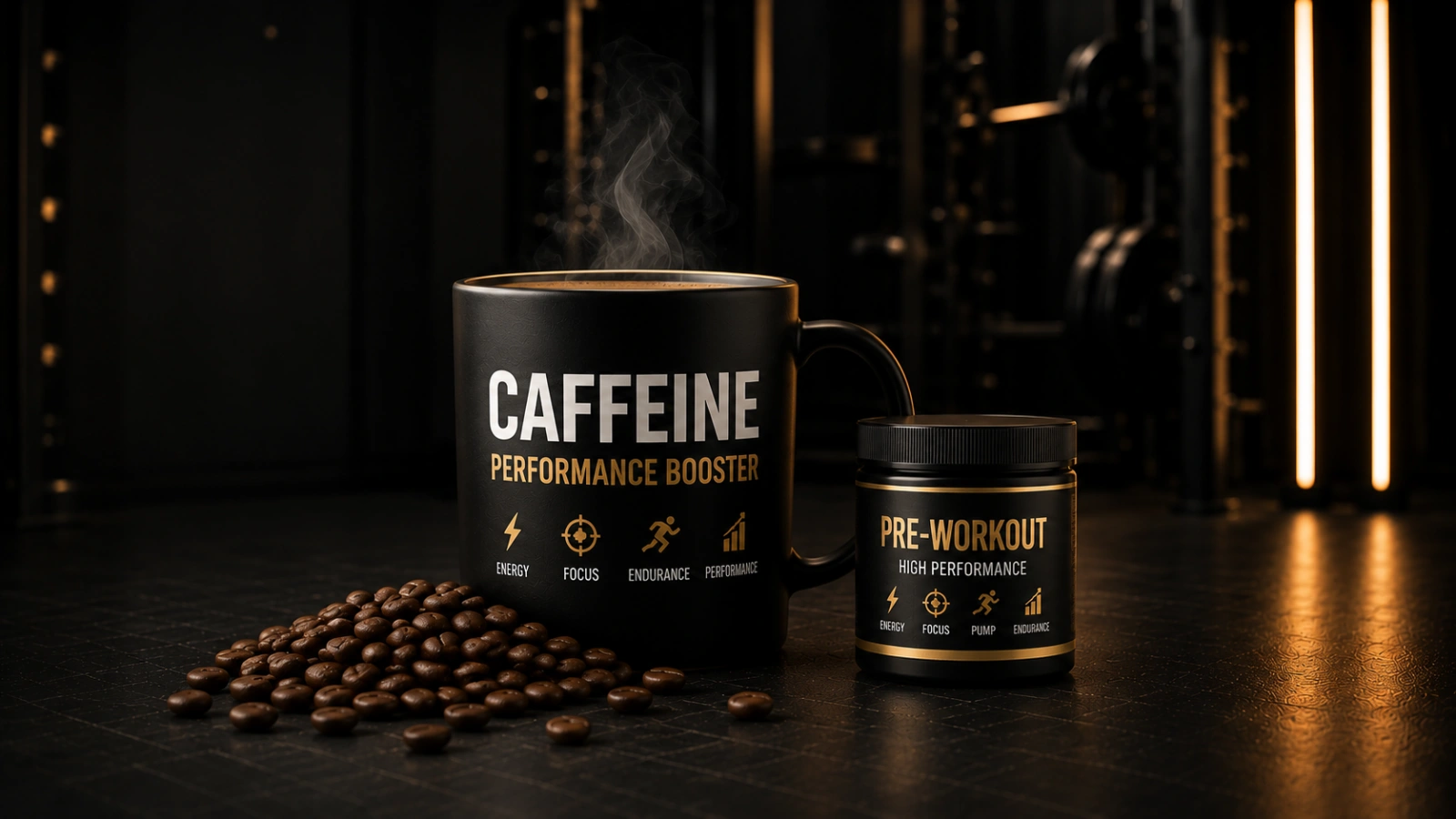
Coffee also contains naturally occurring compounds that may influence absorption and individual response, while caffeine capsules or pre-workout supplements provide a more consistent and measurable dose.
The best choice depends on personal preference, tolerance and convenience rather than performance differences alone.
Are There Any Side Effects?
Most healthy adults tolerate moderate caffeine intake well. However, excessive amounts may cause:
- Difficulty sleeping
- Increased heart rate
- Anxiety or nervousness
- Digestive discomfort
- Jitters or shakiness
Individuals who are sensitive to caffeine may experience these effects even at relatively low doses.
Who Should Be Careful?
Caffeine supplementation may not be appropriate for everyone.
People with certain cardiovascular conditions, uncontrolled hypertension, anxiety disorders, pregnancy, or those advised to limit caffeine intake should consult a qualified healthcare professional before using caffeine supplements.
The Bottom Line
Caffeine is one of the most effective evidence-based supplements for improving exercise performance. It is not required for successful training, but when used responsibly and at an appropriate dose, it can improve strength, endurance, focus and overall training quality.
As with any supplement, consistency in training, nutrition and recovery will have a far greater impact on long-term progress than caffeine alone.
References
1- Grgic J, et al. The Effects of Caffeine Intake on Muscle Strength and Power: A Systematic Review and Meta-Analysis. Journal of the International Society of Sports Nutrition, 2018. PubMed.
2- Guest NS, et al. International Society of Sports Nutrition Position Stand: Caffeine and Exercise Performance. Journal of the International Society of Sports Nutrition, 2021. PubMed.
3- Southward K, et al. Effects of Acute Caffeine Ingestion on Endurance Performance: A Systematic Review and Meta-Analysis. Sports Medicine, 2018. PubMed.
This article is for general educational purposes and does not constitute medical advice.